AI Hype Sold You Prompts. Now It's Plugins. Neither Replaces a Plan.
There is a cottage industry built on the premise that you just need to learn to ask AI better questions. Prompt engineering courses. Prompt libraries. Cheat sheets with magic phrases to unlock the AI's true power. And now, just as the hype around prompting fades, the same industry has a new answer: skills and plugins. One-click solutions. Pre-built intelligence. Problem solved — apparently.
It is a distraction. Getting real results from AI is not about better prompting, but better at planning. Know what you want before you open the chat window. Arrive with a goal, a structure, and a definition of done.
Software Development Worked This Out First
When Andrej Karpathy — co-founder of OpenAI — coined the term "vibe coding", he described the practice of describing a project to an AI chatbot and accepting the output without closely reviewing it. It sounded like a productivity revolution. It became a lesson in what happens when you have no plan.
One founder built his entire startup using Cursor AI with zero handwritten code. Then attacks started: users bypassed his paywall because there was no authentication system. Attackers spammed his API because there was no rate limiting. The database filled with garbage because there was no input validation. None of this was the AI's fault. He had never specified what "working" meant.
An AI conversation is a collaboration, not a search query. When you type a question and hit enter and accept whatever comes back, you are not using AI — you are hoping. A 2025 analysis of AI agent deployments found that workers who laid out a plan before prompting — defined their goal, outlined steps, anticipated failure points — were far more likely to actually use the output. Yet only 5% of employees who use AI at work do so in ways that genuinely transform their output. The rest are having conversations and calling it productivity.
Think Like an Architect
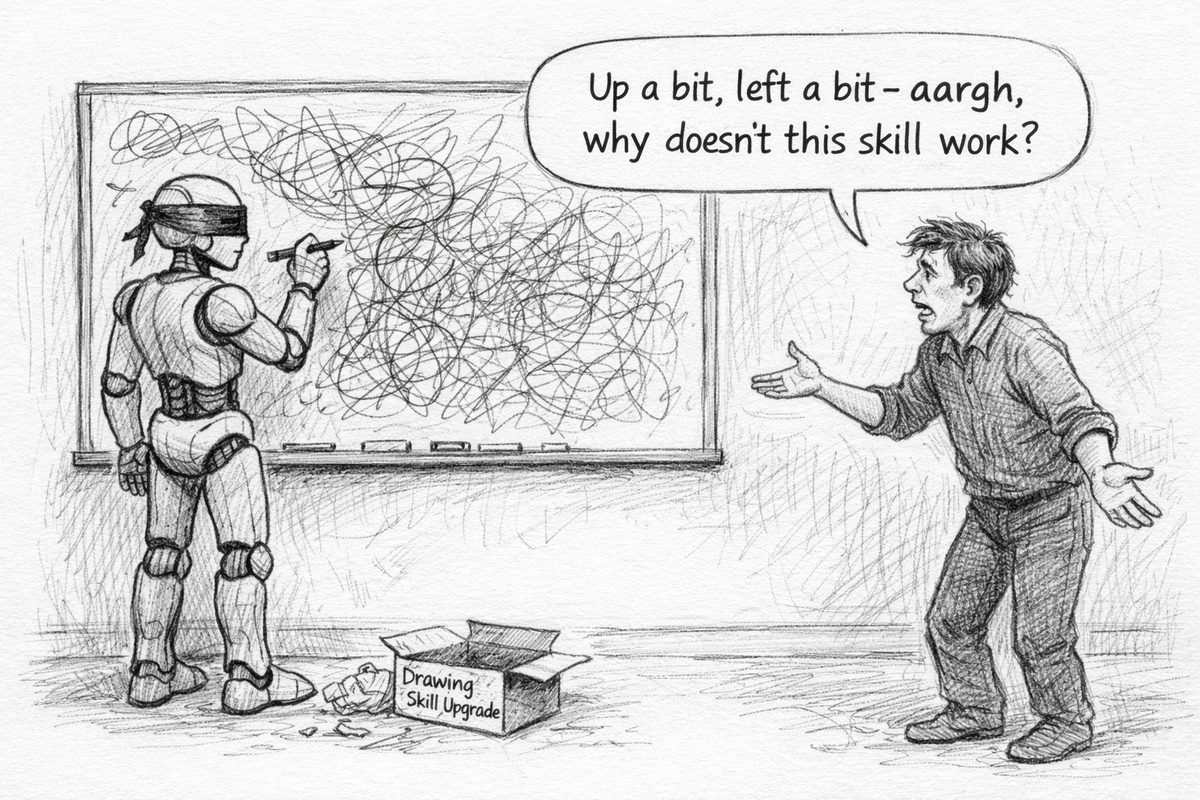
The most effective AI users think like architects. They decompose the problem before they open the tool. They ask: what is the output? What are the constraints? What does success actually look like? Only then do they engage the AI. Without it, you are basically running the tool blindfolded.
Software development has already institutionalized this under the name Spec-Driven Development. The workflow is: define intent, write the specification, review the plan, execute. The AI handles the implementation. The human handles the thinking. Thoughtworks named it one of the most important engineering practices of 2025 and talked about context engineering.
Skills and Plugins Won't Save You Either
So the industry has found a new answer. OpenAI launched AgentKit. Anthropic ships Claude with Skills and Plugins. The sales pitch writes itself: stop prompting, just install. Except the same problem remains. A skill is someone else's plan. It is not yours. Install a content writing plugin with no brief, no audience, no goal — and you will get content. Generic, directionless content. The tool changed. The mistake did not.
The counter-argument is that prompting still matters. It does. A clear, well-structured prompt outperforms a vague one every time. But prompting is execution. Planning is strategy. And you cannot execute your way out of a strategy you never had.
References
[1] Kaspersky — Vibe coding security risks, including the Enrichlead case study (2025). kaspersky.com
[2] Suproteem K. Sarkar, University of Chicago Booth School of Business — "AI Agents, Productivity, and Higher-Order Thinking: Early Evidence From Software Development" (November 2025). ssrn.com
[3] Google & Ipsos — Only 5% of workers are "AI fluent" (February 2026), via Fortune. fortune.com
[4] Thoughtworks — Spec-Driven Development: Unpacking one of 2025's key new AI-assisted engineering practices. thoughtworks.com
[5] MIT Technology Review — From vibe coding to context engineering: 2025 in software development (November 2025). technologyreview.com